
In honor of Blindness Awareness Month, we are pleased to share a recent blog post from historian Peggy Chong, author of several books, and publisher of The Blind History Lady website, and chair of the National Federation of the Blind of Colorado’s Preservation of Historical Documents project which organized and preserved records of the history of blind activities in Colorado dating back to 1915.
“The real first blind Governor”
On Sunday, May 24, 1925, the Trinity Church in Denver, Colorado was packed with the Who’s Who of Colorado. Politicians, cattle ranchers, members of the insurance industry, the current Governor, almost all state officials, and several hundred family and friends crowded the church. The local newspapers listed the more than one-hundred honorary pallbearers, none represented the blind community that the deceased worked closely with the last decade of his life.
The funeral was for former Colorado Governor Elias M. Ammons, board member for almost ten years of the United Workers for the Blind (UWB).
Remaining photographs of the funeral and the hours he laid in State at the Capitol on Thursday, May 21, the day after his death show no blind men or women, mourning the loss of a leader in the blind community. Was that an oversight or were the blind mourners a small percentage of the crowd, unidentified and unphotographed?
Elias paid his membership dues to the UWB, around 1916, a year after its founding. After prominent blind men such as Ammons and publisher Lute Wilcox, joined the organization, it quickly became an official, state-wide, non-profit organization of blind men and women. One of the goals of the UWB was to improve training for adult blind, something Elias had none of and felt was desperately needed for those less fortunate than himself.
Elias was elected to the state board of the UWB in 1917 and continuously through 1925. He died before completing his eighth term in office. Ammons and James Downing, UWB member, blind, and a member of the Colorado House of Representatives, with other blind leaders led the fight for the passage of bills for a pension for the blind and a commission for the blind. Both legislative efforts passed and were signed into law during Ammons lifetime. He chaired the legislative committee, training other blind members how to lobby and formulate legislation.
During the year of 1918, Elias contacted all his friends, asking them to sign petitions of support for the pension bill. Everyone did so as a favor to their friend. Some even gave a small financial contribution. He was quoted as a leader for the pension bill in hundreds of newspaper articles. He used his personal contacts to ensure coverage in rural newspapers. Yet, that same year, Elias had other public projects he actively worked on with as much attention from the media and his sighted associates.
Was blindness something he hid, or did he see it as just another characteristic of himself? Did the other projects mean more to the public, his family, and himself?
As a teen, Elias M. Ammons, born July 26, 1860, contracted measles that effected his eyes to the point where he could not read long due to eye strain. Because of his vision loss he gave up the idea of attending college and later gave up a newspaper career. He worked cutting and hauling logs and editing a newspaper before the eye strain became too much.
Elias became a cattle rancher in the late 1880’s. Railroads began grabbing land to open the West. A booming mining industry in the new state of Colorado polluted freshwater streams needed for grazing cattle. Ranchers felt their livelihood threatened by all the rapid changes to the land and its use. Elias spoke his concerns openly at local meetings, then followed up with action to better his situation.
Based on Elias’s ability to successfully problem-solve with businesses and local governments, and include his neighbors in his successes, his Republican neighbors sent him to the state house of representatives in 1890. He served two terms; the second term, Ammons was elected Speaker of the House. Unlike his predecessors, Elias was assigned a clerk to assist with all his reading. Next he won a seat in the state senate for another two terms. Meanwhile he ran his cattle ranch. Because Elias could no longer read at all, his wife, and later his daughter became his secretary, reading to him and typing his letters.
He helped organize the Colorado Cattle and Horse Growers’ Association, National Western Stock Show, (still operating today), and organized the First National Bank of Littleton. He served on several school boards and was always a promoter of education for all. He financially and actively supported the women’s suffrage movement and legislation to give the women of Colorado the right to vote.
In 1912, he ran for Governor against three other men. Elias ran as a Democrat, receiving 42.9% of all votes cast. The Progressive candidate, Edward Costigan received 24.8%, Republican, Clifford Parks, 23.7% and the Socialist candidate, Charles Ashelstrom 6%. Democrats controlled the House and Senate that session. His inaugural banquet was held at the Advertising Club with a guest list that represented most political parties.
By this time, Elias lost so much of his vision that a few newspaper articles covering the Republican party, referred to him as the “little blind Governor.” What travel vision he had in the past was gone, yet he traveled on his own when necessary, often getting lost, but quickly finding someone to help him find his way. Conversations with his new-found guide often proved to be more informative than any news article or legislative report on subjects dear to his heart. Daughter Elizabeth functioned as his personal secretary at the capitol in addition to the usual staff assigned to the Governor’s office.
Elias served only one term as Governor, losing the confidence of the citizens of Colorado, primarily over only one issue, the Ludlow Massacre that included the death of twelve children. (see Ludlow Massacre – Wikipedia) News articles and the republican party made sure the massacre overshadowed all the positive accomplishments of his term in office. The massacre was the subject of congressional hearings in Washington D.C. held before the House Committee on Mines and Mining in 1914 and covered extensively in the Colorado press.
After his term as Governor, he became president of an insurance company, president of the Denver Chamber of Commerce and a board member of the State Historical and Natural History Society. He dictated articles for publication for many magazines such as the Christian Science Monitor and the new Colorado Magazine, published by the Colorado Historical Society. If he wrote any articles on blindness, they have not stood the test of time. The day before his death, his secretary from the historical society took dictation for an article at Elias’s bedside that was published in the Colorado Magazine after his death.
He used his secretaries and readers to conduct business. Although he continued to hand-write letters to his children up until the time of his death, it was difficult for him. His handwriting became more illegible near the end. Handwritten letters from Elias were short. No documents or letters from him remain, if he ever wrote any on his personal feelings about himself or the loss of his sight.
His family and close, long-time, friends took the lead in planning Elias’s funeral. Involvement in blindness issues was new to Elias and the state of Colorado. While most of his other adventures intersected with each other, the UWB had no connection with Elias’s other world.
Maybe his new, blind friends were not snubbed, rather, were relegated to the background of the funeral as his family and friends promoted Elias in the way they knew and worked with him most of his life.
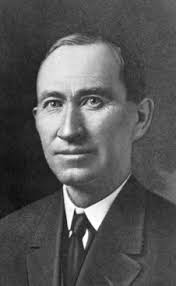
Featured image: Colorado Governor Elias M. Ammons, courtesy of the Colorado State Archives
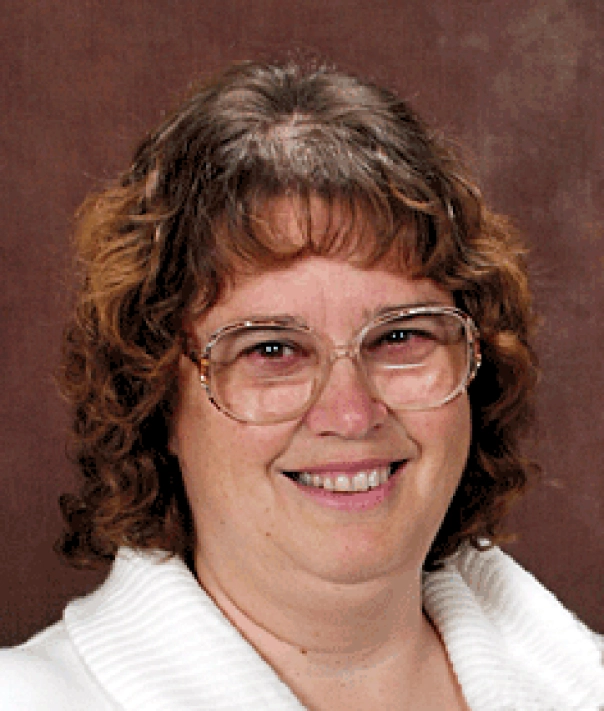
Peggy Chong, the Blind History Lady
For the past three years Peggy Chong chaired the National Federation of the Blind of Colorado’s Preservation of Historical Documents project which organized and preserved records of the history of blind activities in Colorado dating back to 1915. The collections include minutes, news articles, and files from the United Workers for the Blind, The Colorado Federation of Blind, The Denver Area Association for the Blind, and the National Federation of the Blind. These priceless materials are now available through the Colorado Virtual Library and the Plains to Peaks Collective Service Hub (PPC) of the Digital Public Library of America. For more information on Peggy Chong’s research and publications, please visit her website at: https://theblindhistorylady.com or contact her at: theblindhistorylady@gmail.com